Raleigh's Teardown Boom Skipped Hayes Barton. Here's the Rule That Explains Why
August 13, 2026
August 13, 2026
Drive through most of inside-the-Beltline Raleigh this summer and you'll pass at least one lot mid-demolition. A dumpster in the driveway, a chain-link fence around a scraped foundation, a construction sign where a 1940s brick ranch used to sit. It's become background noise in close-in neighborhoods that don't carry historic district protection, where older homes are giving way to new-builds at a pace that has longtime residents doing double takes.
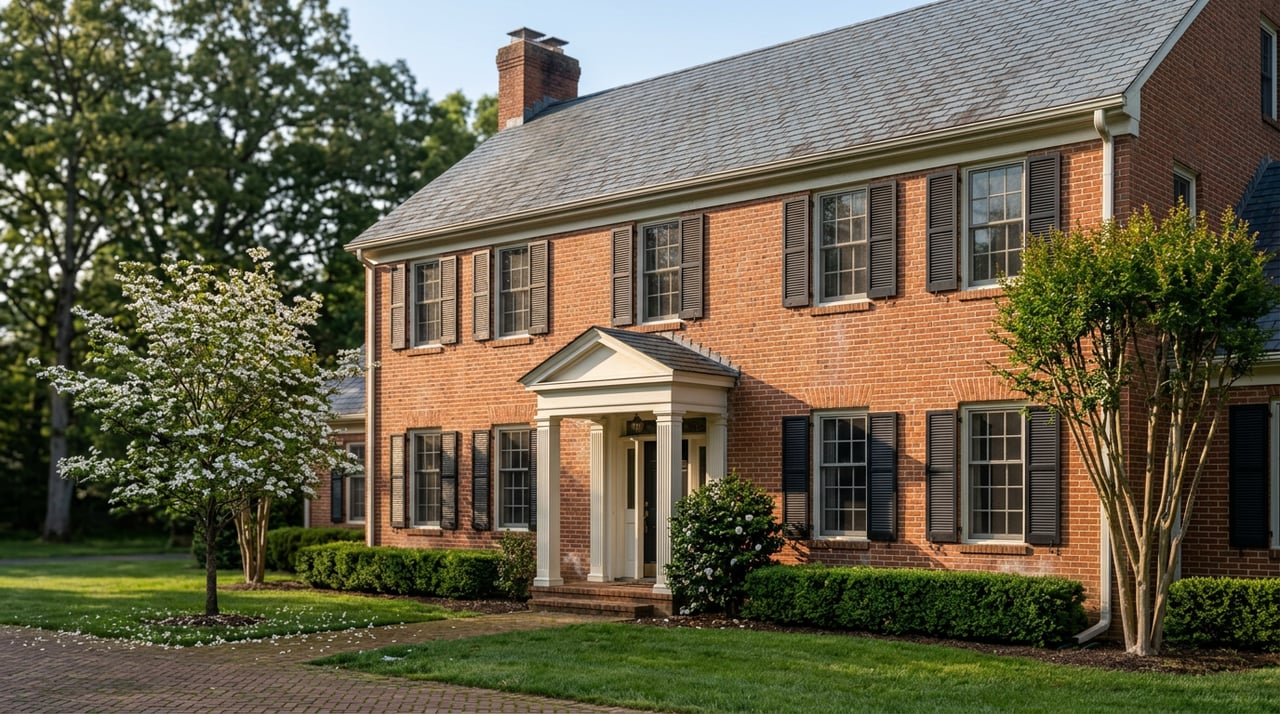
Cross into Hayes Barton, though, and that same walk feels different. The 1920s Tudor Revivals and Georgian Revivals are still standing, mostly untouched, mostly occupied by the same families who bought them years ago. If you're comparing neighborhoods and wondering whether that's a coincidence of buyer taste or something structural, it's the latter. There's a specific rule that explains it, and understanding it changes how you should think about what you're actually buying if you put an offer in on a Hayes Barton address.
The citywide backdrop matters here. Raleigh recorded 252 residential demolitions in 2025, up from 124 in 2024 and 105 in 2023, more than doubling year over year according to a report that tracked city permitting data alongside News & Observer coverage of the trend. For many owners and developers, the math has flipped: scraping an aging house and building new is penciling out better than a major renovation, especially on lots close to downtown where land value alone can justify the teardown.
That math depends on speed. A developer buying a lot needs to close, demolish, and start framing within months, not years, because every extra month is carrying costs on a construction loan. Anything that slows that timeline erodes the return the whole strategy is built on.
Forest Park resident Michael Lindsay called the trend a "shame" and a "waste" in comments to the News & Observer, a frustration that's showing up on front porches and neighborhood listservs across the city's close-in neighborhoods.
Forest Park doesn't carry historic district protection. Neither do plenty of the other inside-the-Beltline pockets seeing the fastest turnover. That absence of protection is the variable worth isolating.
Hayes Barton isn't just an old neighborhood with good bones. It's a formally designated Historic Overlay District, and it's been listed on the National Register of Historic Places since 2002, covering 457 buildings across 1,750 acres, laid out originally by landscape architect Earle Sumner Draper with roads that follow the natural terrain rather than a grid.
That designation isn't decorative. Under the city's zoning rules, any exterior change to a property inside a Historic Overlay District, and any demolition, requires a Certificate of Appropriateness before it can move forward. Small projects get reviewed administratively as Minor Work COAs. Larger ones, including full demolitions, go to a quasi-judicial Major Work COA hearing in front of the Raleigh Historic Development Commission's COA Committee, which meets monthly and evaluates the request against the city's Design Guidelines for Raleigh Historic Districts and Landmarks.
That's a real process with real timelines, and it applies to a scrape-and-rebuild the same way it applies to swapping out original windows.
Here's the part that actually reshapes the economics. Under North Carolina General Statute 160D-949, a local historic preservation commission cannot outright deny a Certificate of Appropriateness for demolition. What it can do is delay the effective date of that COA for up to 365 days on a property within a designated district. For individually designated landmarks, that 365-day delay is mandatory rather than discretionary. The delay can be shortened if the owner can show extreme hardship, but the default posture of the rule is to buy time, not to permit a fast exit.
Picture what that does to a developer's spreadsheet.
| Non-designated close-in lot | Hayes Barton lot | |
|---|---|---|
| Demolition approval | Standard permit process | Certificate of Appropriateness required |
| Worst-case delay before demolition | Typical permit review timeline | Up to 365 days, at the commission's discretion |
| Holding cost exposure | Months | Potentially a full year or more |
A year of holding costs on a construction loan, on top of the uncertainty of whether the commission grants the maximum delay or a shorter one, is enough to break the spec-home playbook that's fueling the citywide numbers. That's not a matter of Hayes Barton buyers loving old houses more than buyers elsewhere. It's a matter of the redevelopment math not working the same way inside the boundary.
If you're weighing Hayes Barton against a comparably priced, comparably located close-in neighborhood without historic designation, you're not just comparing square footage and lot size. You're comparing two different sets of rules about what can happen to the house next door.
Buy in Hayes Barton because you want the 1920s architecture and you plan to live in it, and that COA process is working in your favor. The Tudor Revival on the corner is unlikely to become a three-story new-build that blocks your afternoon light next spring, because the same friction that would slow down your own demolition plans slows down everyone else's too.
Buy expecting the "underpriced teardown lot with upside" play that's working elsewhere in the city, and that plan likely doesn't pencil out here the way it might one street over in a neighborhood without the overlay. The land-value-only math that's driving 252 demolitions citywide runs into a very different timeline once a Certificate of Appropriateness enters the picture.
Neither position is right or wrong. They're just different bets, and the historic overlay designation is the mechanism that decides which bet makes sense.
None of this means renovation inside Hayes Barton is free of friction. Replacing a roof, changing window materials, adding a deck visible from the street, all of it can trigger a COA review, even if it stays at the staff level as a Minor Work application rather than escalating to a full commission hearing. That review adds time and, often, added design and documentation cost that a non-designated renovation wouldn't require.
North Carolina offsets some of that for owner-occupants willing to do the paperwork. The state's rehabilitation tax credit program allows homeowners to claim a 15% state income tax credit on qualifying rehabilitation expenses for a non-income-producing historic property, once rehab spending exceeds $10,000 within a 24-month window. The credit is capped at $22,500, which caps eligible expenses effectively at $150,000 per property. It can be claimed the year the work is completed, or carried forward for up to nine years if you can't use it all at once, and it's available once every five years per property.
A few things determine whether a given Hayes Barton house actually qualifies:
That's a real, usable number for a buyer weighing whether the added COA friction is worth it. It won't fully offset a full kitchen gut or a whole-house rewire, but on a $100,000 to $150,000 rehab, it's a meaningful piece of the return.
Does the historic designation mean I can't renovate at all? No. Ordinary maintenance and repair that doesn't change the design, material, or appearance of an exterior feature doesn't require a COA in the first place. The review process kicks in for changes that alter what's visible from the street or affect the district's overall character.
What if my house isn't a "contributing" structure? Not every building inside a historic district boundary carries contributing status. That designation comes from the original architectural and historical survey done when the district was formed, and it affects both your COA obligations and your tax credit eligibility. Worth confirming before you assume either applies.
Does the 365-day delay mean demolition is basically impossible? No, and that's an important distinction. The commission can't deny the COA outright. It can only delay it, and only up to a maximum, with hardship provisions built in. It changes the economics of a fast flip. It doesn't make redevelopment illegal.
If you're weighing a purchase in Hayes Barton against something in a neighborhood without this layer of protection, or if you already own a contributing property and are trying to figure out what a renovation actually costs once the tax credit is on the table, that's exactly the kind of conversation worth having before you write an offer or start pulling permits. Key Realty Team works these close-in Raleigh neighborhoods regularly and can walk through what a specific address means for your plans. Unlock Your Real Estate Dreams, starting with the questions that actually matter for this one.
Stay up to date on the latest real estate trends.
Lifestyle

We invite driven professionals to grow within a collaborative environment defined by integrity, refinement, and results.