Country Club Hills Home Prices: Two Markets, Not One
August 13, 2026
August 13, 2026
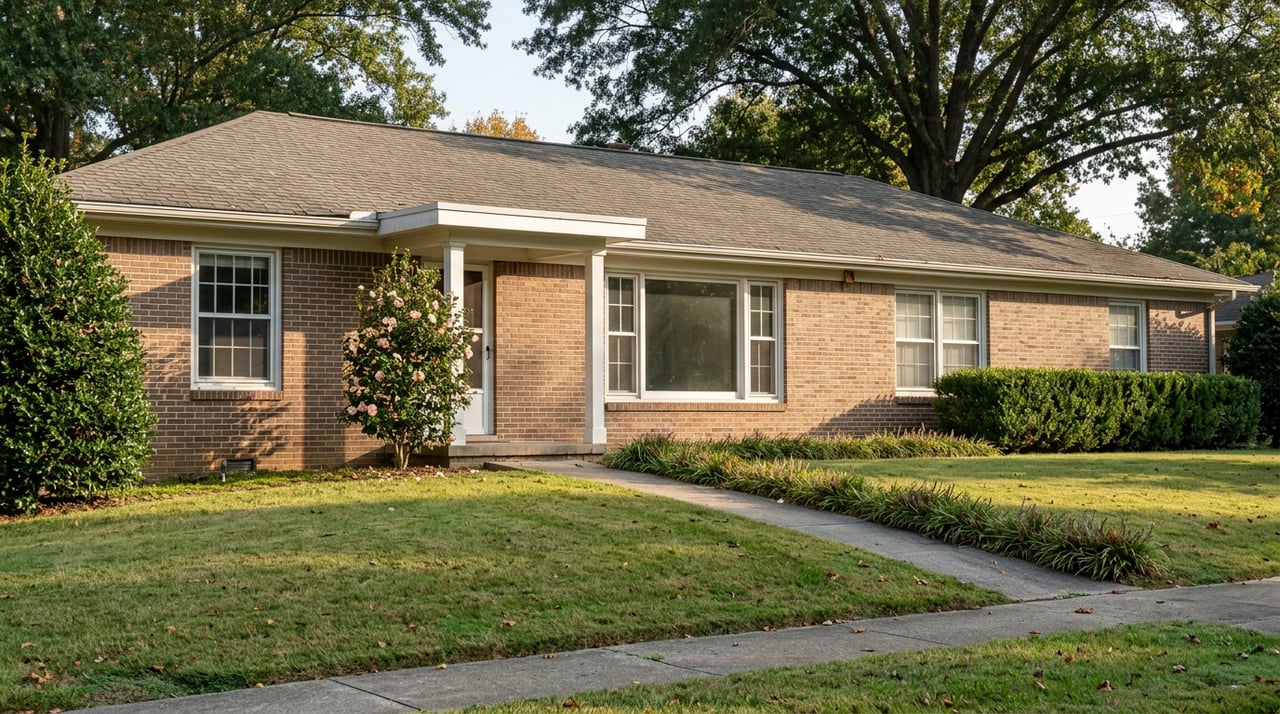
Two listings went up in Country Club Hills within weeks of each other this year. One was an original 1950s brick bungalow, the kind that has sold in this neighborhood for decades. The other was a spec home rising on the fairway of Carolina Country Club, built by Raleigh Custom Homes and entered as a showcase property in this fall's Triangle Parade of Homes. Same zip code. Same neighborhood name on the sign. Almost nothing else in common.
That gap is the story. Country Club Hills gets described, over and over, as a neighborhood with a wide price range: something in the low $400,000s for an original 1950s brick ranch, and well past $3 million for the newest construction on the golf course, according to current listing data for the 27609 zip code. Most guides treat that spread as texture, proof the neighborhood has "something for everyone." It doesn't. It has two buyer pools that rarely compete for the same house, and understanding which one you're shopping in changes how you read every listing you see here.
The bungalow core of Country Club Hills was built out between the early 1950s and the late 1960s, when the neighborhood emerged as one of Raleigh's first planned suburbs, laid out with curving streets and deep setbacks around a country club that had already been open for four decades. Those original brick ranches and split-levels are still standing on streets like Overbrook Drive and Canterbury Road, and plenty have been tastefully updated inside while keeping their 1950s footprint.
Then there's the second product: cleared or clearable lots positioned for new construction, the kind that get marketed as land rather than as houses. A recent listing for a .58-acre lot with roughly 100 feet of frontage on the Crabtree Creek Greenway was pitched purely as a building opportunity, complete with an architect's plan already drawn for the site. A separate .51-acre parcel in the neighborhood was listed the same way, simply as ground ready for a new house. Neither is a fixer-upper. Both are land, priced as land, for buyers who intend to build something that doesn't exist yet.
A buyer comparing "Country Club Hills homes" on paper is really comparing a 1958 ranch to a 2026 spec build and calling the difference "market range." It isn't range. It's two different transactions wearing the same neighborhood name.
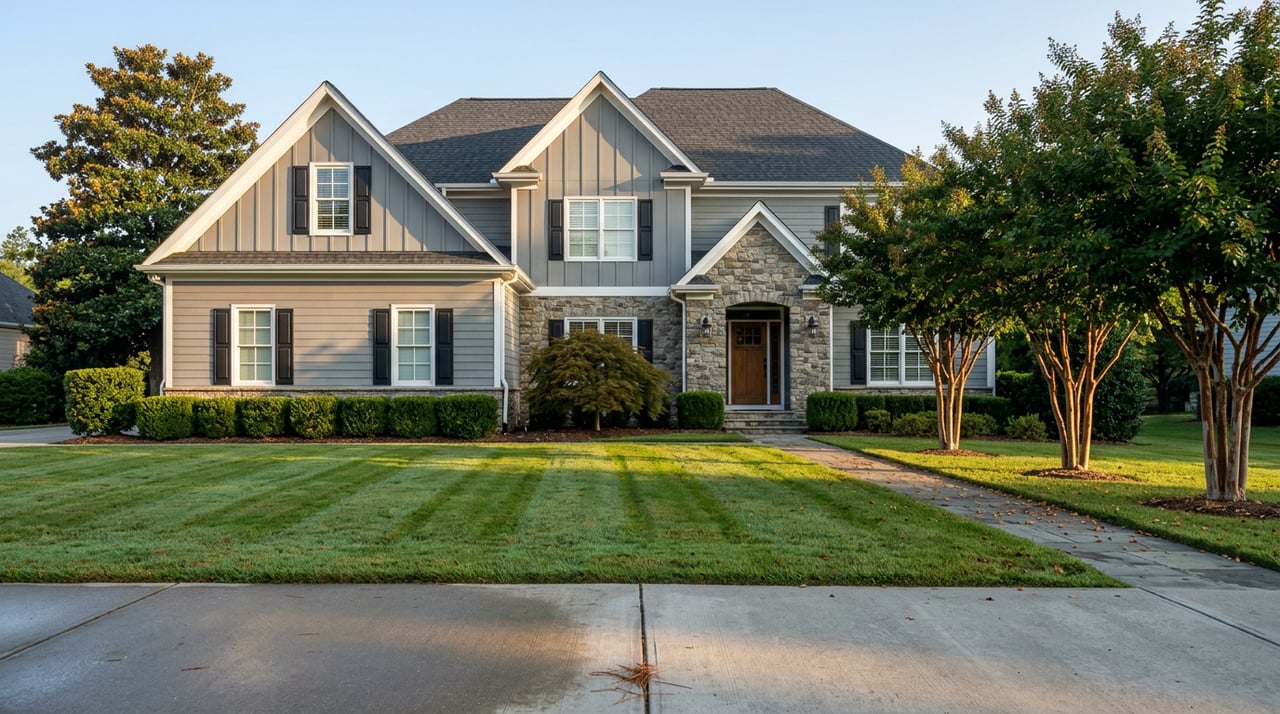
The clearest evidence of this split is happening on the Carolina Country Club fairway right now. Raleigh Custom Homes has a pre-sale spec residence positioned directly on the golf course, built specifically as an entry in the 2026 Triangle Parade of Homes, which runs three consecutive weekends this October across Wake, Durham, Orange, and Chatham counties. That home isn't a renovation story. It's new square footage rising where an older structure or a raw lot used to be, in a neighborhood most guides still describe as a fixed, decades-old inventory of ranches and bungalows.
Country Club Hills isn't unique in this. Raleigh Custom Homes has another 2026 Parade entry a few miles north, on a .64-acre lot fronting the golf course at North Ridge Country Club, roughly 5,900 square feet, built in the same spec-and-showcase pattern. If you're comparing Country Club Hills to North Ridge, or to any other older Raleigh neighborhood organized around a golf course, you're looking at the same underlying mechanism twice: interior-lot inventory that ages in place, and frontage-lot inventory that gets replaced.
| Interior bungalow core | Golf course & Greenway frontage | |
|---|---|---|
| Typical era | 1950s to 1960s original construction | New or newly rebuilt, ongoing through 2026 |
| What you're buying | A structure, often already renovated | Land value, with the structure secondary |
| Recent examples | Original brick ranches on interior streets | .58-acre Greenway lot, .51-acre build-ready lot, 2026 Parade spec home |
| Who's competing for it | Buyers wanting move-in-ready or light-renovation projects | Builders and buyers financing new construction |
Here's the mechanism underneath the table. On an interior street, a home's value tracks its condition, square footage, and finishes, the way most residential appraisals work. On a frontage lot, the land itself is doing most of the pricing, because proximity to Carolina Country Club's course or direct access to the Crabtree Creek Greenway is fixed and non-replicable. You can renovate a kitchen. You cannot manufacture more golf course frontage.
That's why a buildable half-acre lot can list at a price that would buy an entire finished bungalow three streets over, and why a builder is willing to put a $3 million-plus spec home on ground that, ten years ago, held a much smaller structure. The land was always worth more than the house sitting on it. The Parade of Homes entry just made that visible.
If you're cross-shopping Country Club Hills against Hayes Barton, Five Points, or North Ridge, the neighborhood-level median is close to useless on its own. What matters is which of the two markets a specific address belongs to, and that's answerable with a short checklist before you ever schedule a showing:
A renovated interior bungalow and a new-build frontage lot will not appraise against each other, and a lender comparing your target property to the wrong comp pool is a friction point you want to catch before you write an offer, not during underwriting.
Does this mean Country Club Hills is becoming a teardown neighborhood? No. Most of the interior street grid, including stretches of Haverhill Drive and Overbrook Drive, remains original 1950s and 1960s construction with no active rebuild pattern. The teardown and new-build activity is concentrated specifically where lots touch the golf course or the Greenway, not spread evenly across the neighborhood.
Will a renovated bungalow ever sell for what a new-build frontage lot sells for? Not on renovation alone. The frontage premium is tied to the land, not the finishes, so a beautifully updated interior-street home is still priced against other interior-street homes, not against golf course new construction.
Is this pattern specific to Country Club Hills? No, and that's useful if you're comparing neighborhoods. The same builder has a nearly identical 2026 Parade of Homes entry on the North Ridge Country Club golf course, which suggests this frontage-versus-interior split is a broader feature of Raleigh's older country club neighborhoods, not a quirk of one address.
If you're weighing a bungalow renovation against a frontage rebuild, or trying to figure out which comp pool a specific Country Club Hills listing actually belongs to, that's exactly the kind of local read a national portal search won't give you. Key Realty Team works these Raleigh neighborhoods block by block, and we're ready to help you Unlock Your Real Estate Dreams with a clear-eyed look at what you're actually buying.
Stay up to date on the latest real estate trends.

We invite driven professionals to grow within a collaborative environment defined by integrity, refinement, and results.